How to Start a Workplace Volunteering Program

Starting a CSR (corporate social responsibility) program at your workplace might sound a little intimidating, especially if you don’t regularly manage those types of initiatives day in and day out.
A platform like Groundswell, however, is built by CSR and tech professionals who want to make programs like workplace volunteering as intuitive as possible. Using the right technology and completing every important step for setting up a volunteer program (which we cover below) will put you in a great position.
Table of Contents:
- Defining Workplace Employee Volunteering
- Why Start a Workplace Volunteering Program?
- A Step-by-Step Guide to Creating a Workplace Volunteering Program
- 1. Secure Funding and Support from Executives
- 2. Align Volunteer Programs with Your Employer’s Broader Mission
- 3. Learn What Employees Want to See in a Volunteering Program
- 4. Set Eligibility Criteria for Non-Profit and Charitable Partners
- 5. Let Employees Know About Volunteering Opportunities
- 6. Spotlight High-Performing Volunteers
- 7. Lean On Purpose-Built Workplace Volunteering Software
Defining Workplace Employee Volunteering
Workplace volunteering refers to initiatives companies execute to make a difference in their communities. Corporate volunteerism is a significant part of many businesses’ broad CSR strategies. It’s great for developing personal connections and strengthening your employer’s brand in the places where it matters most.
When many people hear the words “workplace volunteering,” they think of shifts in a local soup kitchen during Thanksgiving or roadside litter cleanups. Those are two classic (and impactful) examples, but they only scratch the surface of what a robust workplace volunteer program can be.
In the 21st century, companies large and small often provide the following volunteering opportunities:
- Skills-based volunteering, which showcases employees’ expertise and skills. For example, a national law firm could provide pro bono services to nonprofits,
- VTO (volunteer time off, in which employees get paid their regular wage for volunteering—a good idea for businesses that mandate participation.
- Dollars for doers, meaning companies or other organizations pledge a certain amount of money for every volunteering unit (shift, hour, or outputs).
- Virtual volunteering, which is crucial for maximizing employee participation. Working shifts at a crisis text line is a fantastic virtual volunteering opportunity for employees who typically work night shifts.
- Micro volunteering, which divides tasks that employees can do whenever they have the time. These opportunities are good for people with unpredictable schedules, such as your on-call crew.
- Days of service, which bring together a large number of volunteers from multiple companies and organizations to fulfill ambitious service goals. The annual MLK Day of Service is perhaps the most notable example.
The most successful CSR programs offer employees a range of volunteering initiatives. If you want to push the participation rate as high as it can go, it’s important to meet deskless, remote, and irregular-shift workers where they’re most comfortable.
Why Start a Workplace Volunteering Program?
The primary purpose of a corporate volunteering program is to make the world a better place and improve people's lives. But there’s no getting around the fact that CSR programs incur expenses—sometimes substantial—for every company.
The good news is that many businesses reap their own financial benefits from running volunteering programs:
- A solid majority (71%) of today’s employees say they’re attracted to workplaces with strong cultures of volunteering and giving.
- 46% of consumers pay close attention to a company’s track record of social consciousness when choosing products.
- 73% of executives believe that corporate volunteering programs help employees cultivate leadership skills, which helps identify future supervisors and managers.
- Comprehensive studies even suggest that companies with workplace volunteer programs perform better financially.
These are just four of many statistics showing the positive effects of workplace volunteering.
A Step-by-Step Guide to Creating a Workplace Volunteering Program
Let’s say you and the rest of your employer’s decision-makers have decided to start a volunteering program. You’ve got some work to do, but it’ll be fun and fulfilling. Just follow these steps, and you’ll be well on your way.
1. Secure Funding and Support from Executives
The C-Suite, company founder, owner, and president need to be the program’s early adopters. They set workplace culture, and employees take cues from them. A successful CSR program begins and ends with full buy-in from the top brass.
2. Align Volunteer Programs with Your Employer’s Broader Mission
If possible, make sure volunteering initiatives connect with your company’s mission statement and purpose.
Not sure how to do that? Consider your company’s industry and your coworkers’ capabilities. Volunteer opportunities that have at least something to do with the work they do are a good way to make your CSR programs a natural extension of your employer’s brand. Skills-based options can accomplish that quite easily.
3. Find out what Employees Want to See in a Volunteering Program
A truly effective and long-lasting corporate volunteering program comes from a top-down, bottom-up approach.
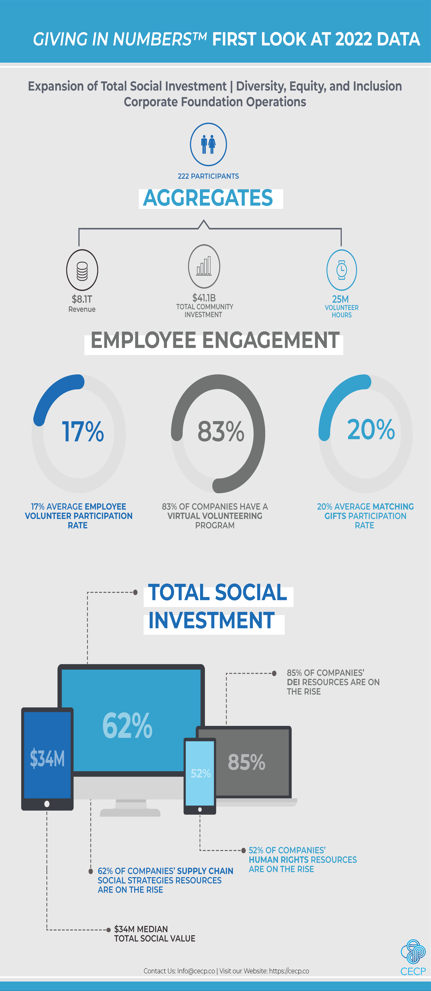
Your employees are the beating heart of any CSR program you decide to execute. Worker-led volunteering means your employer can rise above the 17% employee volunteer participation rate companies see on average.
4. Set Eligibility Criteria for Non-Profit and Charitable Partners
Partnering with a local nonprofit can open up turnkey volunteering opportunities, which will take much of the burden off you and your coworkers. The downside to that is the loss of control you’ll have over the nuts and bolts of each initiative.
Before you decide on a nonprofit, though, make sure it’s politically neutral and without major controversies. Groudswell’s platform has off-the-shelf nonprofit vetting so clients can avoid less-than-optimal partnership opportunities.
5. Let Employees Know About Volunteering Opportunities
Your coworkers are busy. They must filter tons of information every day, and they probably won’t remember a future volunteering initiative they only hear about once or twice. Follow the Marketing Rule of Seven to saturate your message, and leverage every communication medium.
6. Spotlight High-Performing Volunteers
A great way to make CSR programs sticky is to single out employees who rise above their peers. Everyone wants—and deserves, really—some recognition when they go above and beyond for a cause that doesn’t directly benefit them.
7. Lean on Purpose-Built Workplace Volunteering Software
If you want to build a volunteer program that makes a measurable impact and grows with your team, you’ll need to ditch the spreadsheets and manual data entry.
But instead of adding yet another collection of tools to your tech stack, opt for something that allows you to build beyond volunteering. An all-in-one platform like Groundswell gives you the power to build a volunteering program that’s unique to your workplace, with unparalleled customer support there to help you through every step of the process.
Groundswell Brings Workplace Volunteering and Other CSR Programs to Life
Our purpose-built CSR platform is designed for modern enterprises. Groundswell’s social impact software lets volunteerism coordinators plan and build volunteer events, check in employees on the day of service, and analyze participation trends over time.
Only an all-in-one platform gives you the ability to launch and execute not just volunteerism, but other impactful CSR programs and initiatives, like employee donation matching, corporate grantmaking, and more.
We’re ushering in a new era of corporate philanthropy, one where businesses of all sizes can build opportunities to give back.
Want to learn more? Book a personalized demo with our team to get started.
Related resources
How to Start a Workplace Volunteering Program
How to Start a Workplace Volunteering Program
Understanding Philanthropic Responsibility: What it Means for Purpose-Driven Enterprises

Understanding Philanthropic Responsibility: What it Means for Purpose-Driven Enterprises
How to Improve Employee Participation in Corporate Volunteer Programs: 5 Strategies for Success